Every investigation is a stress test: What collisions are really telling you about your fleet

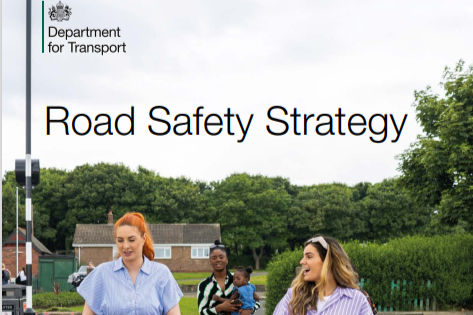
In January 2026, the Government published its first Road Safety Strategy in more than a decade. While much of the attention focused on proposals around driving offences, vehicle technology and enforcement, one of its most important messages received far less attention.
The Strategy embraces a Safe System approach to road safety. It recognises that serious collisions are rarely the result of a single mistake and that improving road safety requires organisations to learn from incidents, use evidence more effectively, and continuously strengthen the systems that support drivers.
Too often, a collision investigation is viewed as the end of an incident - a process to establish what happened, satisfy insurers and decide whether disciplinary action is required. In reality, that is where the greatest opportunity begins.
The most effective investigations act as a stress test for the driver, the policies, the management decisions, and the operational culture that supports them.
A collision tells you far more than who was at fault
When a driver is involved in a collision – regardless of whether there was injury or police involvement - it is entirely appropriate to establish the facts and understand the driver's actions. However, stopping at that point risks overlooking the wider lessons the incident has to offer.
Every investigation should also ask whether the organisation itself contributed to the circumstances surrounding the collision.
Was the driver properly trained for the task they were undertaking?
Were they operating under avoidable time pressures?
Was the route appropriate for the vehicle?
Were existing policies understood and consistently applied?
Had similar incidents already occurred elsewhere in the business?
A collision is rarely just a reflection of one person's decision-making. More often, it reflects how effectively the wider operation supports safe driving.
Stop asking who and start asking why
One of the most common weaknesses in collision investigations is that they conclude as soon as responsibility has been identified. Good investigations will continue asking "why?" until they understand the conditions that allowed the incident to occur.
Consider a driver who reverses into a stationary object.
Poor observation may explain the immediate cause. It does not explain why the driver was distracted, why they were reversing in that location, why that delivery point was considered suitable or whether similar incidents have occurred previously. Each answer reveals another opportunity to reduce future risk.
The objective is to identify the root causes that made the collision possible in the first place, as that is where lasting improvements are made.
The strongest investigations look beyond the driver
The Road Safety Strategy acknowledges that improving road safety requires more than influencing individual behaviour. It requires organisations to understand how vehicles, operational decisions, technology and management systems interact to create or reduce risk.
Most collisions involve more than one contributory factor. A driver's actions may be the direct cause, but investigations frequently identify wider issues such as inadequate route planning, insufficient refresher training, operational pressures, ineffective supervision or policies that exist on paper but are not embedded in practice.
The question should never be:
"Who made the mistake?"
It should be:
"What needs to change so that this becomes less likely to happen again?"
Sometimes the answer lies with the driver, sometimes it lies with management. Often, it lies somewhere in between.
Your investigation should improve the business, not simply close the file
The value of an investigation is measured not by the report it produces, but by the improvements it creates. A well-conducted investigation should lead to evidence-based recommendations that strengthen the organisation as a whole.
That may involve reviewing driver training, changing operational procedures, updating policies, improving communication between departments or reconsidering how certain routes are planned.
When investigations become exercises in assigning blame, organisations often lose the trust of their drivers and the opportunity to learn. When they become part of a wider programme of continuous improvement, they strengthen safety culture, improve operational resilience and provide evidence that the organisation is actively managing road risk.
The warning signs often exist long before the collision
One of the strongest themes running through the Road Safety Strategy is the need to make better use of evidence and data. Fleet operators already hold a significant amount of valuable information through previous collision records, driver training histories, and telematics for example. Individually, these datasets tell part of the story but viewed together, they often reveal patterns that would otherwise go unnoticed.
Our own investigation experience supports this. More than three-quarters of at-fault collisions that we have investigated involve drivers with two or more prior recorded collisions or incidents, despite those drivers representing only about one-quarter of the workforce. That does not mean those drivers are destined to have another collision. It suggests there were opportunities to intervene earlier.
The strongest operators identify recurring themes and monitor trends, using those findings to shape future training and operational decisions.
What should operators review?
Every investigation should leave an organisation asking better questions than before the incident.
For example:
Are we identifying root causes rather than simply recording immediate causes?
Do our investigations result in meaningful operational improvements?
Are recurring trends being identified across different depots, routes or driver groups?
Are managers learning as much from investigations as drivers?
If this incident happened again next month, what would we do differently?
If those questions cannot be answered confidently, there is an opportunity to strengthen the investigation process.
The Government's Road Safety Strategy reinforces a principle that forward-thinking fleet operators have long understood: improving road safety requires more than responding to individual collisions. It requires organisations to learn from them, strengthen the systems supporting drivers and continuously improve the way they manage risk.
Investigating all collisions, from near misses to fatal incidents, provides that opportunity. The organisations that benefit most are not those that experience the fewest incidents, but those that extract the greatest value from every investigation.
For organisations looking to strengthen their collision investigation process, LMP Legal combines specialist legal expertise with structured investigations that identify root causes, support evidence-based decision-making and help turn individual incidents into long-term operational improvement. Contact us to discuss how we can support your fleet’s wider safety strategy.