
Minor collisions, major legal risk: What fleet operators have learnt since the revised careless driving guidelines
Twelve months ago, the revised sentencing guidelines for careless driving came into force. At the time, the focus was on the key changes. A year on, we’re now focused on how fleet operators should think about the legal risks arising from minor collisions.
Incidents that might once have been viewed as straightforward insurance claims still have the potential to become criminal investigations. For professional drivers and the businesses that employ them, the consequences can extend well past the immediate outcome of any prosecution.
The legal risk does not begin when a driver is charged; it begins from the moment a collision occurs.
The legal environment has become more demanding
The revised sentencing guidelines in July 2025 reflected a larger shift in how professional driving is viewed. Vocational drivers are expected to meet a higher standard, recognising the greater responsibility that comes with operating commercial vehicles. The guidelines introduced the potential for higher financial penalties and short periods of disqualification in cases that may previously have resulted in penalty points alone.
For individual drivers, those changes increase the consequences of a brief distraction. For fleet operators, the implications are much broader.
A short driving ban can remove an experienced employee from the workforce overnight. Insurance costs may increase. Internal investigations and disciplinary procedures may follow. What begins as a criminal matter for one driver can quickly become an operational issue affecting multiple parts of the business.
The revised guidelines did not create these risks; they simply confirmed the importance of managing them effectively.
Minor collisions no longer mean minor legal risk
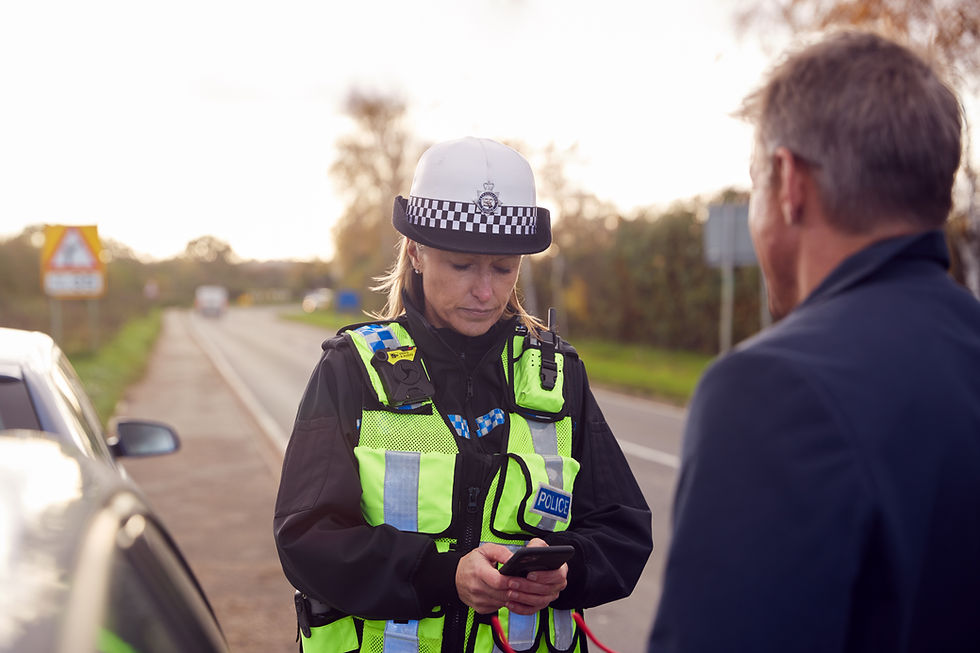
One of the biggest misconceptions we continue to encounter is that a minor collision is unlikely to become a police matter. According to the Department for Transport's road casualty data, police attended around 64% of reported collisions involving only slight injuries. A slight injury is one that does not require hospital admission and typically includes cuts, bruising or sprains. These incidents can still result in a criminal investigation into whether the driver's standard of driving fell below that expected of a competent and careful driver.
There is no equivalent dataset of collisions in which no injury is ultimately recorded. That should not be interpreted to mean that police don’t attend those incidents. Immediately after a collision, it is not always possible to determine whether someone has been injured, as some injuries may not become apparent until later. Where there is any uncertainty, police attendance remains entirely possible – and early legal advice is important.
The investigation rarely stops with the driver
Perhaps the biggest lesson for fleet operators over the last twelve months is that a collision is rarely viewed in isolation. Investigators are increasingly interested not only in what happened, but also in whether the circumstances could reasonably have been anticipated or managed. That naturally moves attention beyond the driver and towards the systems supporting them.
Questions posed to fleet operators may include:
Was appropriate driver training provided?
Were previous incidents reviewed and acted upon?
Were fatigue or operational pressures considered?
Were policies actively implemented rather than simply written?
Did managers intervene when risks were identified?
What operators should review now
The first anniversary of the revised sentencing guidelines provides a useful opportunity to review whether existing procedures remain fit for today's legal environment. Operators should consider:
Do drivers know who to contact immediately following a collision?
Do incident reporting procedures support potential criminal investigations?
Has driver training been updated to reflect the higher expectations placed upon vocational drivers?
Are previous incidents reviewed to recognise recurring behaviours and opportunities for improvement?
Whilst the revised sentencing guidelines did not change the offence of careless driving, they have changed the context in which fleet operators should manage road traffic collisions. Minor collisions have always carried legal risk, and over the last year, it has become increasingly clear that the consequences of getting the response wrong can stretch well beyond the driver.
Businesses cannot choose whether a collision becomes a criminal investigation, but they can choose how prepared they are if it does.
For fleet operators, LMP Legal provides immediate specialist legal support from the roadside through to the conclusion of any criminal investigation, helping protect both drivers and businesses from the earliest stages of the process.


